











Chocolate and coconut do make a particularly satisfying combination. Originally manufactured by the Peter Paul Candy Manufacturing Company, Almond Joy has been a popular American sweet since 1946; it consists of a coconut filling topped with almonds and covered in milk chocolate. The Mounds bar, also by the Peter Paul Candy Manufacturing Company, debuted in 1920, and has coconut, with dark chocolate but no nuts. Both remain popular today. The successful advertising slogan “Sometimes you feel like a nut, sometimes you don’t” was conceived in 1970.
Similar to the Mounds bar, Bounty was introduced in the United Kingdom and Canada by the Mars Company in 1951. It offers a coconut filling covered with milk chocolate in a blue wrapper, and there is a dark chocolate version in a red wrapper. Both packages feature tropical beaches and coconut palms, advertising a taste of paradise. Mars sought to enter the American market with Bounty in 1989 but failed, even though in blind taste tests, Bounty was preferred. Americans are nostalgic about their childhood sweets.
The British continue to enjoy their traditional coconut sweets such as coconut ice, a pink and white layered sweet, which is also popular in Australia and New Zealand. In Australia, this sweet is made with an ingredient called copha, known as “white cloud”, a form of vegetable shortening that is produced from hydrogenated coconut oil. In the United States, a chocolate third layer is added to the sweet squares to make a treat known as a Neapolitan Coconut. The same sweet is popular in Mexico and marketed as Bandera de Coco, with white, red and green colouring added, in reference to the Mexican flag.
A local favourite in the Philadelphia area, available only seasonally around St Patrick’s Day on March 17, “Irish Potatoes” are neither Irish nor potatoes but do contain coconut. In the early 1900s, Philadelphia was essentially the sweets capital of America, with more than two hundred manufacturers, as well as being one of the prime destinations for immigrants from Ireland. Coconut cream filling, often made with Philadelphia cream cheese and rolled in cinnamon, makes a treat resembling a miniature potato.
Sales of these delights filled the lull between Valentine’s Day and Easter sweets sales. A more elegant coconut sweet is Raffaello, developed in 1990 by the Italian confectionery manufacturer Ferrero. Coconut covers a wafer sphere filled with sweet cream and an almond – definitely not something the home cook could easily make.
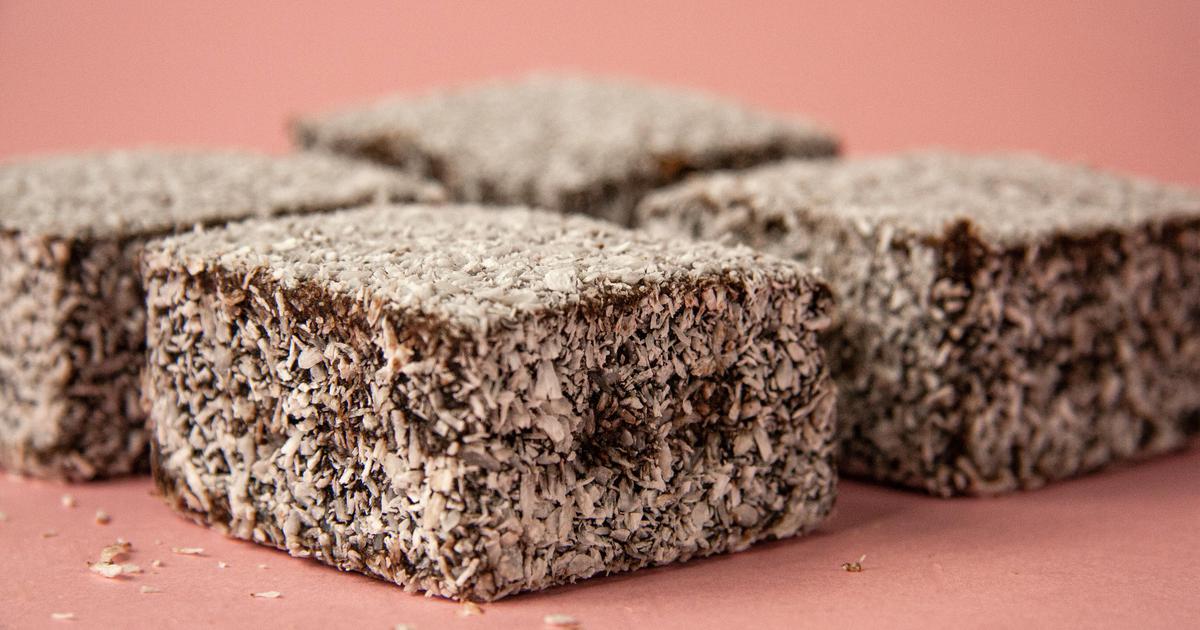
At about the same time, Amy Schauer (1871–1956) was writing cookbooks in Queensland, Australia, and included the popular Lamington cake, a Victoria sponge cake dipped in chocolate and rolled in coconut. The cake is so beloved that it has its own national day, July 21. “Lamington drives”, in which the cakes are sold to raise funds for charities, are held on that day. While there are numerous theories, the most likely explanation for the Lamington name is Schauer’s intent to honour Lady Lamington, the patroness of Brisbane Central Technical College, and not Lord Lamington, the Governor of Queensland (1896–1901), who referred to the cakes as “bloody poofy wooly biscuits”.
Back in London, the career of cookbook writer Eliza Acton was eclipsed by Mrs Beeton, whose name continues to be much better known from this period in the celebrity cookbook world. Mrs Beeton’s 1907 edition of Household Management: Guide to Cookery in All Branches contained more than 20 recipes for coconut dishes, savoury and sweet, including the addition of coconut for thickening in a lobster and chicken curry, and a coconut soup very much like Acton’s. Mrs Beeton’s 1899 edition includes a helpful section entitled “Provisions in India, General Observations on Indian Cookery”, written for the English housewife who finds herself running a household in India.
The process of producing desiccated coconut was developed in the 1880s. With this process, shipping a preserved form of coconut meat from Sri Lanka and India to Great Britain became practical. In the early 1900s, manufactured sweets were enjoying a booming market, and the preserved grated coconut and chocolate were prime ingredients.
While British cooks adopted coconut for sweets and curries, French and German recipes rarely included this ingredient. These countries were not as involved in the early establishment of coastal trade empires as Britain, Spain and Portugal. In a cuisine priding itself on using fresh, local ingredients, there is only one classic French recipe calling for coconut: a three-ingredient coconut macaron called congolais, referring to the former African colony of French Congo. In her cookbook, Alice B. Toklas goes so far as to say, “For Parisians this classic fruit [coconut] from afar, amongst the pomegranates or oranges and pineapples, remains a useless curiosity.”
Excerpted with permission from Coconut: A Global History, Constance L Kirker and Mary Newman, Pan Macmillan India.
